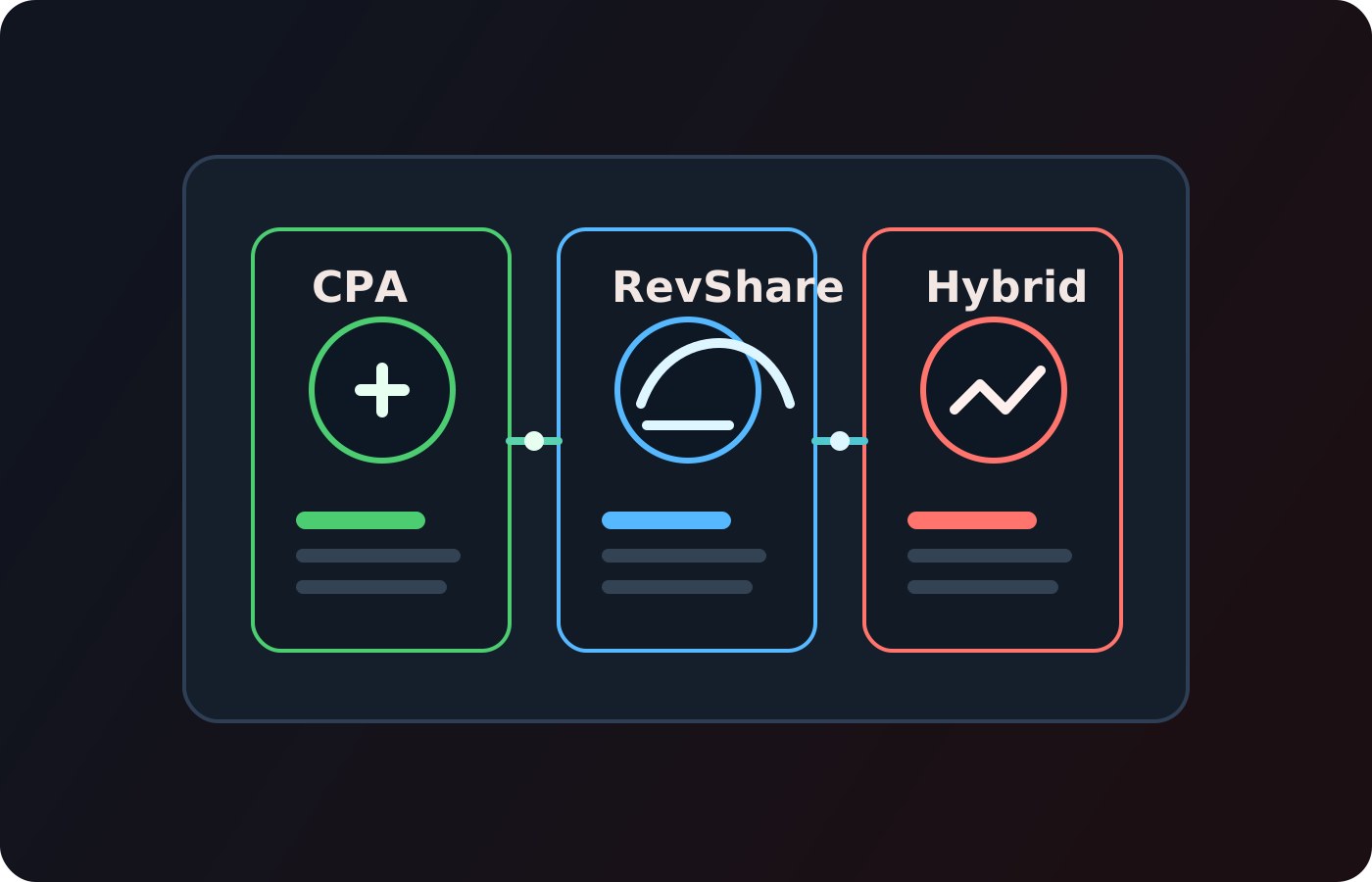
Why payout model choice matters
Many affiliates focus on EPC, CR, and GEO performance, but the payment model itself changes how revenue is generated and how stable it feels over time. A great offer under the wrong commercial structure can still become frustrating if the economics do not match your traffic style.
This is why strong networks usually offer more than one deal type. Different publishers, funnels, and acquisition strategies need different payout logic to perform well.
What CPA means
CPA stands for cost per action. In this model, the affiliate receives a fixed payment when the user completes a specific conversion event. That event could be a lead, deposit, registration, sign-up, install, or another approved action.
- Revenue is predictable on a per-conversion basis.
- It is easier to estimate short-term cash flow.
- It usually works well for affiliates who want cleaner testing logic and faster recycling of spend.
What RevShare means
RevShare gives the affiliate a percentage of the revenue generated by the users they brought in. Instead of being paid once, the affiliate can keep earning as long as those users continue generating value.
This model can become very profitable with high-quality traffic, but it requires patience. Earnings are less immediate and can fluctuate depending on retention, user behavior, and product performance.
What Hybrid means
Hybrid combines elements of CPA and RevShare. The affiliate usually receives an upfront payment for the conversion plus a smaller share of the long-term revenue generated by that user.
For many affiliates, this model offers a more balanced structure. It reduces the wait associated with pure RevShare while still creating upside beyond the first action.
When CPA is the better option
- You want immediate and predictable returns.
- You are testing new traffic sources and want clean benchmark data.
- You need faster cash rotation for campaign volume.
- Your traffic is strong enough to convert but not necessarily built for long retention.
When RevShare is the better option
- You trust the long-term quality of your audience.
- You can wait longer for revenue to mature.
- You want to build recurring earnings instead of one-time conversion payouts.
- You work in verticals where user lifetime value matters more than the first event.
When Hybrid is the better option
- You want a mix of short-term payout and long-term upside.
- You are scaling and want to reduce risk without giving up recurring revenue.
- You need a model that supports both testing and retention-driven profitability.
- You want a more flexible structure for premium or proven traffic.
How affiliates should decide
The best model depends on how your traffic behaves and how your business is structured. Affiliates with tight budgets may prefer CPA because the payout is faster and more predictable. Teams with stronger confidence in user quality may prefer RevShare. Affiliates who want balance often move toward Hybrid.
It also helps to talk with a network about custom terms. Strong publishers do not always need to fit into a rigid model if their traffic quality justifies a more flexible arrangement.
Final take
There is no universal best model. CPA is often better for speed and testing, RevShare for long-term value, and Hybrid for balance. The smartest choice is the one that matches your traffic quality, capital rhythm, and scaling goals. Once you understand how each structure affects risk and upside, it becomes much easier to negotiate terms and build a more stable affiliate strategy.
If you want to compare these models with real offers, return to the main CPAGEN page or continue reading in the CPAGEN Blog.